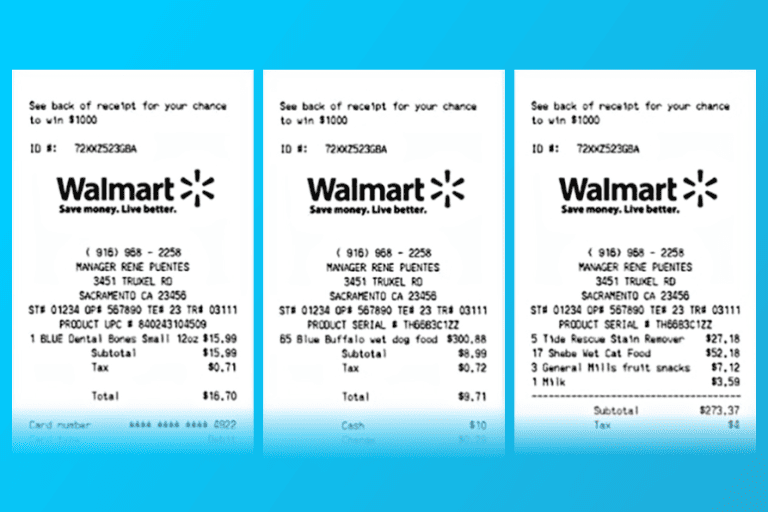
A few years ago, creating a fake receipt required time, skill, and some software knowledge.
Today, it takes seconds. Often when speaking with customers I tell them to type “fake Walmart receipt” into Google and multiple websites populate that allow anyone to generate a flawless counterfeit receipt instantly.
AI advances have transformed the landscape of fraud. While AI has opened powerful new doors for marketers — personalization, predictive analytics, creative automation — it’s also given fraudsters a matching toolkit. The same speed, scale, and sophistication that marketers celebrate in AI are now being used against them.
How AI Supercharges Fraud
AI Tools can now:
- Generate realistic receipt templates for any retailer, restaurant, or store complete with logos, SKU lists, timestamps, store IDs, etc.
- Auto-fill and randomize details (dates, items, prices) to evade pattern-based detection systems.
- Manipulate real receipts by automatically adjusting totals, products, or dates in seconds.
- Mimic human submission behavior using bots that upload fake receipts from varying IP addresses and devices to appear “legit.”
What once took hours of Photoshop work now happens at machine speed. Fraudsters no longer need deep design skills — just access to a free AI tool.
Why This Matters
For marketers running cashback, rebate, loyalty programs, or promotional campaigns, the implications are huge. Each fake receipt represents stolen marketing spend — dollars that should have gone toward real customers. Worse, when fraudsters flood your program, they skew data, distort campaign performance metrics, and erode ROI visibility.
You may think your promotion was a success because you had a high amount of awardable receipts entered. But if 30%–40% of those “conversions” were fraudulent, your insights, budget planning, and customer loyalty metrics are all compromised.
The New Normal: Industrialized Fraud
This isn’t a fringe problem. Payment providers in survey and cashback industries report 25%–50% of activity is fraudulent. Fraudsters collaborate, share templates, and even automate entire operations. It’s not one person behind a laptop — it’s networks of bad actors exploiting every digital opportunity. We have watched this in real time on sites like Reddit.
Marketers must accept that AI-powered fraud is now here and can be done at scale. Treating it as a small risk is no longer an option, and frankly dangerous to reputation, results and budgets.
What Marketers Can Do
- Ensure you have advanced detection strategies protecting your campaigns — Implement AI-based fraud detection capable of recognizing manipulated or generated images.
- Audit vendors regularly — Demand transparency on how they detect fake receipts and whether their methods evolve with new threats.
- Education and Team plans — Ensure marketing, operations, and finance teams understand the speed and sophistication of modern fraud. When implementing campaigns that include purchase validation solutions make sure a comprehensive communication and weekly review plan is in place with both the internal and external teams.
What once took hours of Photoshop work now happens at machine speed. Fraudsters no longer need deep design skills — just access to a free AI tool.
Conclusion
AI has changed the rules — for everyone. While it can supercharge marketing creativity and efficiency, it also arms fraudsters with the same tools. To win this new race, marketers must fight fire with fire: adopt smarter AI defenses, continuously audit processes, and stay alert to evolving fraud tactics.
The age of manual fraud detection is over. The era of AI-versus-AI has begun. The really good news is AI technology is also assisting in creating advanced security mechanisms to proactively fend off the fraudsters.