Investors have always looked for an edge, naturally. The question is where to find an edge that’s actually reliable and scalable rather than just lucky. Earnings reports tell you what already happened. Analyst forecasts tell you what someone thinks might happen. Social sentiment tells you what people are saying, which is often very different from what they’re doing.
None of those things tell you what consumers are actually doing right now at the point of purchase, which is usually the most honest signal of where a brand or category is headed. That’s the case for data for investors grounded in real consumer purchase behavior.
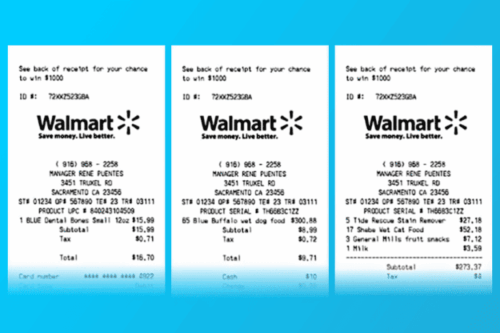
Not modeled estimates or survey responses, but verified transaction data showing what people bought, where they bought it, how much they paid, and whether they came back. When that data is current, granular, and validated, it surfaces patterns that traditional investment research often misses until they show up in a quarterly report.
Why Most Investor Data Lags Reality
The fundamental challenge with most data sources used in investment research is that they’re backward-looking by the time they reach you. Syndicated retail data is typically delayed by several weeks. Consumer surveys capture stated intent rather than actual behavior, which are two very different things. Web traffic and app engagement metrics are useful for digital-first businesses but say almost nothing about physical retail performance, which still accounts for the majority of CPG sales.
The result is that most investment theses about consumer brands are built on a foundation that’s already outdated. You’re making a forward-looking bet using data that reflects a world from six to eight weeks ago, filtered through aggregation and modeling that smooths out exactly the granular signals that tend to matter most.
The investors who consistently get ahead of consensus aren’t necessarily smarter about the companies they’re analyzing. They’re often better at finding data sources that are closer to the actual moment of purchase, less distorted by the time they arrive, and specific enough to reveal the signals that category-level aggregates smooth over.
What Purchase-Level Data Actually Shows
The most useful consumer signals for investors tend to come from customer transaction data analysis rather than category-level aggregates. Here’s what that actually means in practice.
1. Purchase frequency and repeat rate.
A brand that’s acquiring new customers but not retaining them is a fundamentally different investment thesis from one where first-time buyers are converting into repeat purchasers at a high rate. Aggregate sales figures can make both look similar in the short term, especially if the acquisition-heavy brand is spending heavily on promotions to paper over the retention problem. Transaction-level data distinguishes them clearly, and repeat purchase rate is one of the more reliable leading indicators of sustainable revenue growth that rarely shows up in a standard financial model.
2. Basket behavior and trade-up signals.
What consumers put in their basket alongside a brand’s products tells you a lot about who they are and where the brand sits in their consideration set.
- Are buyers of a premium SKU also buying other premium products across the basket, or are they deal-seeking across categories?
- Is a mid-tier brand starting to see basket compositions that look more like a premium buyer profile?
These shifts tend to show up in transaction data well before they appear in any financial metric.
3. Retailer mix and velocity trends.
Which retailers are driving volume for a brand, and how is that mix shifting over time? A brand growing quickly at club stores but losing ground at conventional grocery is telling a different story from one growing consistently across all channels. Retailer-level velocity data, when it’s current and verified, is a useful proxy for distribution health and demand quality that aggregate market share figures don’t capture.
4. Price sensitivity and promotion dependence.
A brand where most volume is moving at full price is structurally different from one where sales are heavily concentrated in promotional periods. Transaction data makes this visible at the SKU level, across retailers, over time. Brands with high promotion dependence face more revenue volatility and margin risk, and that risk is often underpriced in an investment model when the underlying purchase data isn’t granular enough to show how much of the volume would disappear if the promotion frequency dropped. That’s a meaningful blind spot.
The Problem With Panel Data and Surveys
A lot of consumer research used in investment analysis still relies on panel data and surveys. Both have their uses, but both have structural limitations that matter when you’re trying to predict growth rather than describe history. When you need to buy consumer data for investment research, understanding what you’re actually getting is as important as the data itself.
Panels are built from a fixed opt-in population that may or may not represent the actual buyer base for the brands you’re analyzing. They’re useful for directional trends but can be significantly off on absolute numbers and can miss emerging shifts in buyer demographics that don’t yet show up in a pre-recruited panel.
Surveys have the self-reporting problem. When you ask someone whether they plan to buy a product, or why they bought it last time, you’re measuring intention and recall rather than behavior. Both are unreliable in their own ways. People consistently overstate their likelihood to make premium purchases and understate price sensitivity, which creates a systematic optimism bias in survey-based consumer research.
Neither problem is fatal in isolation. Panels give you directional trends worth tracking. Surveys can surface attitudinal shifts before they show up in purchase data. The issue arises when these data sources are treated as ground truth for an investment thesis rather than as directional inputs that need to be validated against actual transaction behavior. The further you get from verified purchase events, the more interpretive work you’re doing, and the more room there is for the thesis to diverge from reality.
Building a Consumer Signal Stack
The most sophisticated approach to using consumer data in investment research is to build a layered signal stack rather than relying on any single source. A well-structured consumer information database covering verified purchases across retailers, combined with category-level trend data and qualitative brand research, gives you a more complete picture than any one source alone.
Verified purchase data sits at the foundation because it’s the most direct signal. It tells you what actually happened, with no modeling or inference in between. Everything else is interpretation, extrapolation, or context built around that baseline. When your transaction data is current, retailer-agnostic, and validated before it enters your analysis, the rest of the signal stack becomes more useful because you have a reliable anchor to build from. Without that anchor, you’re stacking assumptions on top of assumptions and hoping the thesis holds.
On top of that foundation, category trends help you contextualize whether a brand’s growth is driven by a rising tide or genuine share gain. A brand growing at twice the category rate is a different story from one growing in line with the market. Qualitative signals, including management commentary, retailer relationships, and new product pipeline, add the forward-looking dimension that transaction data alone can’t provide. The combination is what gives you a thesis with real conviction rather than one that’s hedged on every dimension.
Questions Worth Asking About Any Alternative Data Source
Not all consumer purchase data is created equal, and the differences matter a lot for how much weight you can put on the signals it produces. Before building a thesis around any alternative data source, it’s worth pressure-testing it on a few dimensions that tend to separate genuinely useful data from data that looks useful until it doesn’t.
1. How is it collected?
Verified receipt data, where a real purchase event is confirmed before the transaction is recorded, is a fundamentally different thing from estimated or modeled purchase data. The validation step is what separates a signal from an inference, and that distinction compounds when you’re stacking multiple data points into a thesis. Data that skips validation is essentially asking you to trust the model, not the purchase.
2. How current is it?
A data source refreshed in near real-time tells a very different story from one aggregated and delivered monthly or quarterly. For investors trying to get ahead of earnings, recency is often the difference between an early position and a crowded one. If the data you’re looking at is already six weeks old when it reaches you, you’re not getting an edge, you’re getting confirmation.
3. How granular is it?
SKU-level, retailer-level basket data surfaces the kinds of signals that actually move a thesis: which SKUs are growing, at which retailers, bought by which shopper profiles. Category-level aggregates smooth all of that out. The more granular the data, the more specific your conviction can be, and the easier it is to identify when something is changing before it shows up anywhere else.
The Signal That Doesn’t Lie
Consumer purchase behavior is one of the most honest signals available to investors precisely because it measures what people actually do rather than what they say or what models predict. A shopper who buys a product, pays full price, and comes back the following month is telling you something concrete and repeatable that no survey or earnings call can replicate with the same reliability.
The challenge has always been getting that signal in a form that’s timely, verified, and granular enough to be useful for real investment decisions. That’s where the quality of the underlying data infrastructure matters more than most people acknowledge.
When purchase data is validated at the transaction level, captures full basket context, and is current enough to reflect what’s happening now rather than what happened two months ago, it becomes one of the more powerful tools available for understanding where consumer brands are actually headed, before the market figures it out.
Ourcart’s purchase validation platform turns in-store receipt data into exactly that kind of verified, structured consumer intelligence. Learn more about how investors and analysts use Ourcart’s purchase data to get closer to the consumer signal that matters most.